

What is HDR for TVs?
2024-05-21 11:33:47
Click:
“
Discover how HDR (High Dynamic Range) technology transforms TV viewing by expanding color and contrast. HDR enhances brightness, preserves details in bright and dark scenes, and provides lifelike images. Learn about HDR10, HDR10+, and Dolby Vision to understand their unique benefits and how they improve your viewing experience. Upgrade to an HDR TV for richer colors and deeper contrasts.
”
The current market trend shows a growing preference for high-quality viewing experiences, leading to the increasing popularity of features like HDR (High Dynamic Range). HDR is revolutionizing how we watch TV by enhancing picture quality, making it an essential feature for any modern smart TV.
Understanding HDR
HDR, or High Dynamic Range, refers to a technology that enhances the range of color and contrast in a video display. Unlike standard dynamic range (SDR) content, HDR content can display a wider spectrum of colors and a higher contrast ratio. This means that HDR allows for brighter whites, darker blacks, and a richer array of colors in between. In the realm of television, HDR significantly improves the visual experience by providing more lifelike and vivid images.
Classification of HDR
HDR10: Best for general compatibility and affordability but lacks dynamic metadata.
HDR10+: Enhances HDR10 with dynamic metadata, offering better performance but less content availability.
Dolby Vision: Offers the best quality with dynamic metadata and 12-bit color but at a higher cost and licensing requirements.
How HDR Works
HDR (High Dynamic Range) technology enhances picture quality by expanding the brightness and color range of TV displays. Here's a detailed explanation of how HDR works:
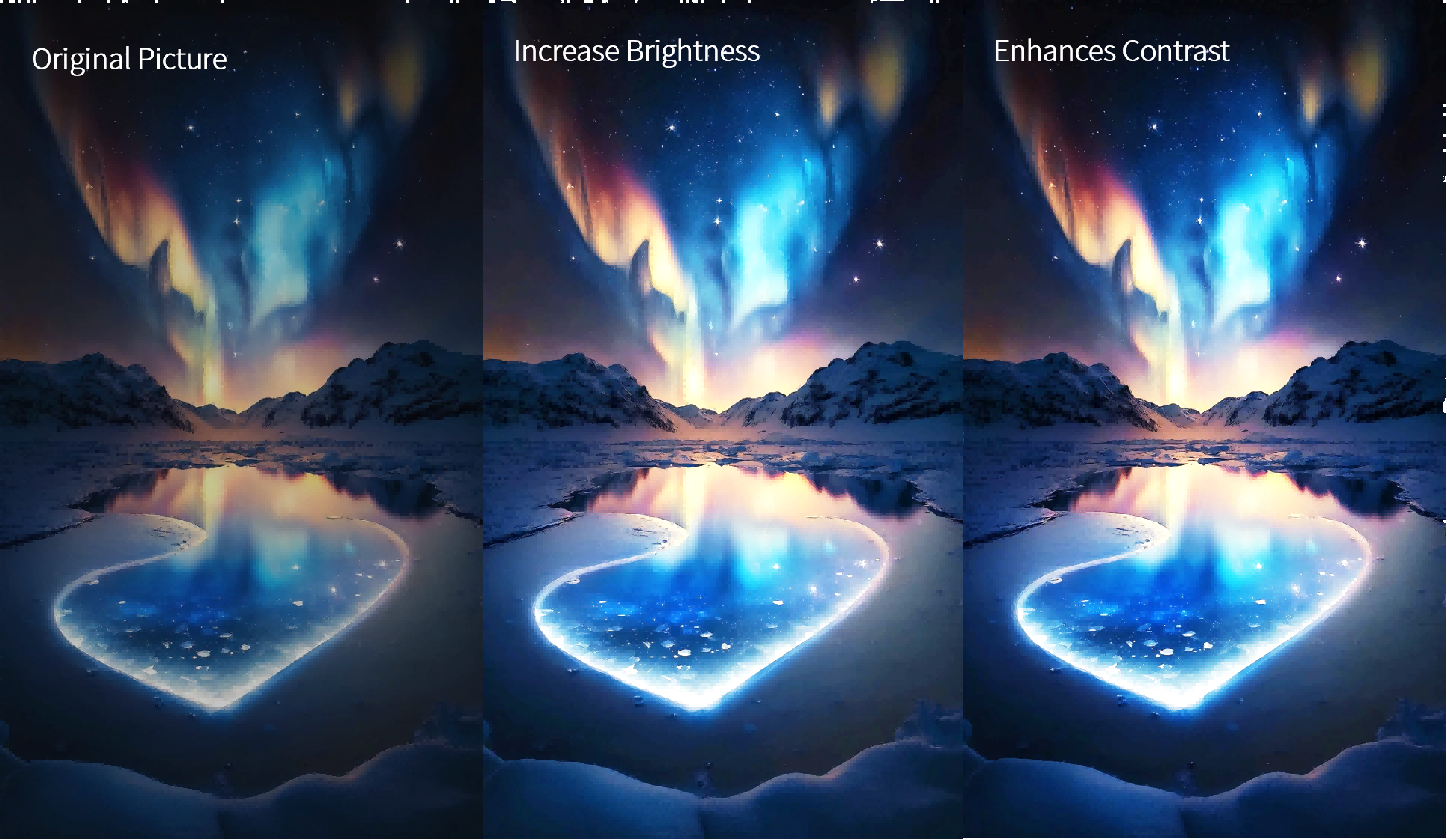
1. Enhanced Brightness and Contrast
HDR increases the brightness and contrast of TV displays for more realistic and vivid images:
Brightness: HDR TVs can achieve higher brightness levels (measured in nits) than standard TVs, making the brightest parts of the image, like sunlight or flames, more vibrant.
Contrast: HDR enhances contrast by increasing the difference between the brightest whites and the darkest blacks, resulting in clearer details in both bright and dark areas of the image.
2. Wider Color Gamut
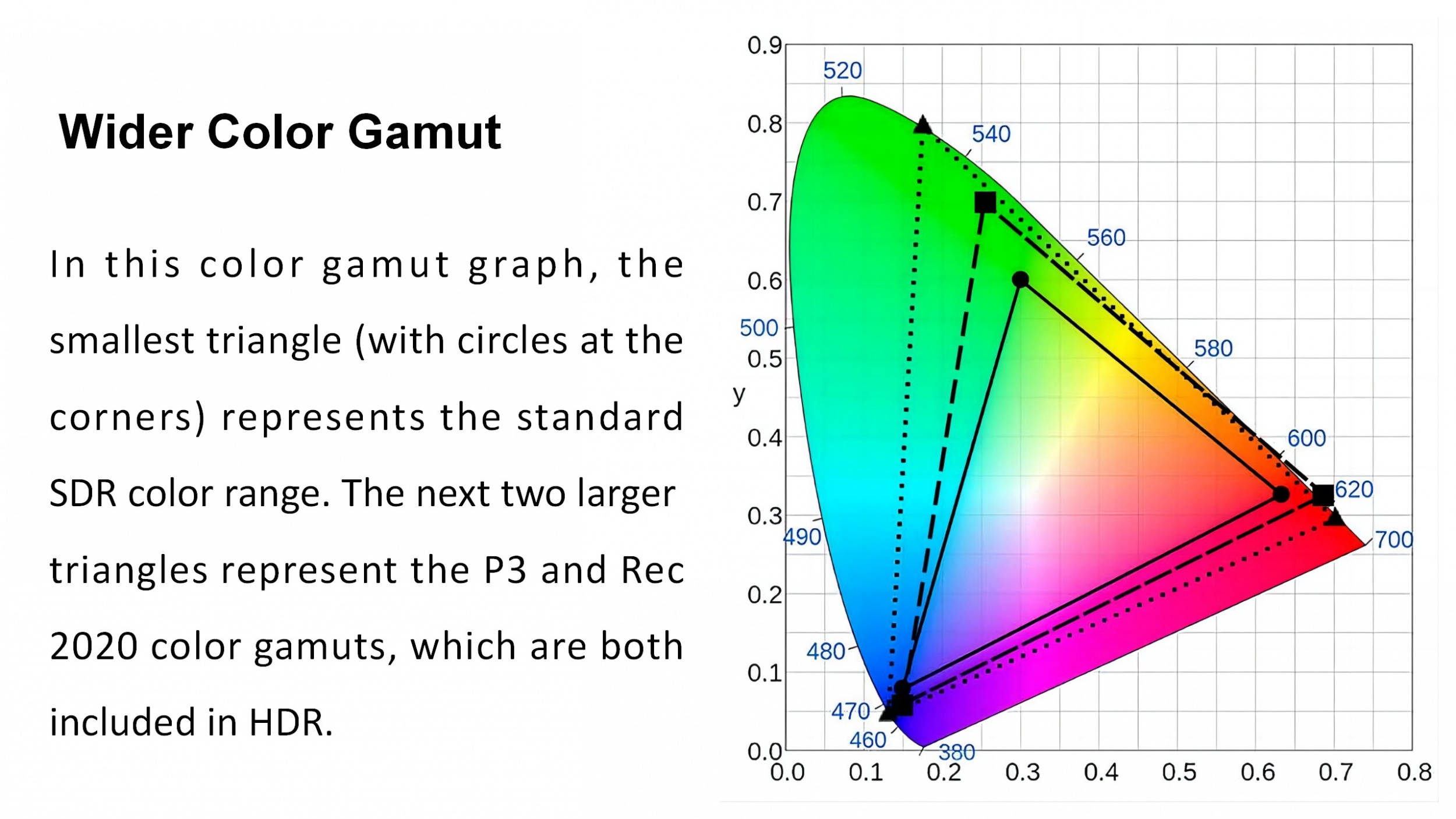
HDR technology displays more colors than traditional SDR (Standard Dynamic Range) TVs by supporting a wider color gamut (such as DCI-P3). This results in more realistic and rich colors, especially noticeable in natural landscapes and colorful scenes.
3. Dynamic Metadata
Advanced HDR standards like HDR10+ and Dolby Vision use dynamic metadata to optimize each frame or scene. Dynamic metadata provides detailed information on how to display each frame, allowing the TV to adjust brightness and contrast according to the specific scene for the best picture quality.
4. Detail Preservation
HDR preserves more details in both bright and dark areas:
Bright Detail: In very bright scenes (like direct sunlight), HDR TVs avoid overexposure, maintaining details like cloud structure.
Dark Detail: In very dark scenes (like night scenes), HDR TVs avoid underexposure, preserving details like objects in shadows.

The benefits of HDR TVs are evident in various viewing scenarios. For instance, when watching a movie with dark, shadowy scenes, an HDR TV will maintain clarity and detail that a standard TV might miss. In bright, colorful scenes, such as a vibrant seascape with a yacht, HDR enhances the colors and highlights, making them more vivid and realistic. This ability to present a wider color palette and better contrast results in more natural and lifelike images, providing viewers with an enhanced visual experience.
Elevate Your Viewing with HDR Technology!
Discover the power of HDR on WEYON Smart TV. Enjoy richer colors, more detailed shadows, and lifelike images that make you feel part of the action. Ideal for movie nights, gaming, and more.Bring your entertainment to the next level!
In summary, HDR is a pivotal feature in modern smart TVs, significantly elevating the viewing experience by offering richer colors, deeper contrasts, and more detailed images.Upgrade to an HDR TV today and transform the way you watch your favorite shows and movies!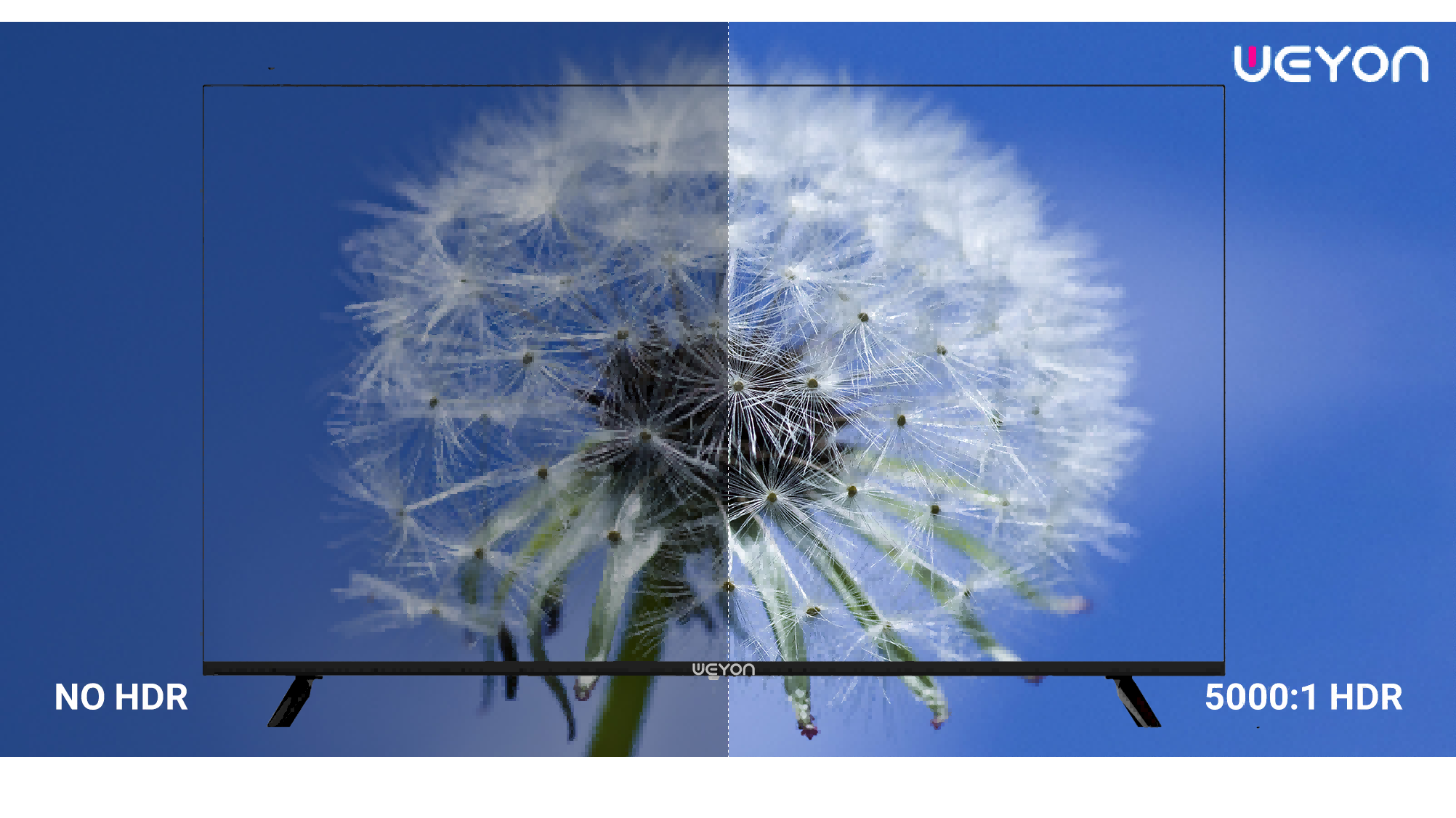
In summary, HDR is a pivotal feature in modern smart TVs, significantly elevating the viewing experience by offering richer colors, deeper contrasts, and more detailed images.Upgrade to an HDR TV today and transform the way you watch your favorite shows and movies!


More information
-

WEYON Shines at LATIN AMERICAN ELECTRONICS Show 2025
WEYON showcased its 32-65" smart TVs at the LATIN AMERICAN ELECTRONICS Show (June 23-26, Brazil), attracting strong interest from buyers and partners. Our smart features, and sleek designs impressed visitors, reinforcing WEYON’s expansion in Latin America. Stay tuned for more!
View Details -
The Impact of Speaker Placement and Power on TV Viewing Experience
Speaker placement and power significantly impact the viewing experience. Choosing the right configuration ensures an immersive and enjoyable time in front of the TV. You tailor your choices based on your specific needs and room setup.
View Details -
Understanding Color Gamut of Smart TVs
Understanding color gamut is key when choosing a TV. It refers to the range of colors a display can reproduce, affecting image accuracy and vibrancy. Wider gamuts like DCI-P3 and Rec. 2020 offer more lifelike visuals. Common standards include sRGB, Adobe RGB, DCI-P3, and Rec. 2020. TVs with broader gamuts provide better image quality, realism, and future-proofing.
View Details -
Smart TV Speaker Position Guide
Understanding the role of speaker position in smart TVs can significantly improve your viewing experience. This article covers various speaker placements and their effects on sound quality and immersion, offering practical advice for choosing the right setup for different room sizes. It highlights the best speaker configurations for small, medium, and large rooms, ensuring an optimal audio experience.
View Details -
What is HDR for TVs?
Discover how HDR (High Dynamic Range) technology transforms TV viewing by expanding color and contrast. HDR enhances brightness, preserves details in bright and dark scenes, and provides lifelike images. Learn about HDR10, HDR10+, and Dolby Vision to understand their unique benefits and how they improve your viewing experience. Upgrade to an HDR TV for richer colors and deeper contrasts.
View Details -
The Essentials of Viewing Angles in Smart TVs
When selecting a smart TV, the viewing angle is crucial for optimal image quality and viewing comfort, especially in larger rooms or for group viewing. This article explains what viewing angles are, how they are measured, and their impact on image quality. It compares different panel types (LED/LCD, OLED, IPS, VA) and provides tips on choosing a TV with the best viewing angles.
View Details -
Unlocking Smart TV refresh rate secrets
Welcome to our guide on refresh rates in smart TVs. In this article, we aim to demystify the concept of refresh rates and explain their significance in enhancing your viewing experience.
View Details -
Demystifying TV Brightness: Shedding Light on Screen Illumination
This article examines the significance of TV brightness, defining it, outlining its specifications, and discussing the optimal settings for various scenarios. Brightness has a direct impact on clarity and the overall viewing experience. Excessive brightness can cause eye fatigue, so it is important to adjust it according to ambient light and personal preference.
View Details




Contact +
E-mail: sales@weyontv.com
Telephone:+86 0591 8376 6891 / +86 18559895619
Working Hours:8:30am-17:30pm (UTC+8)


Copyright ©2024 WEYONTV All Rights Reserved


